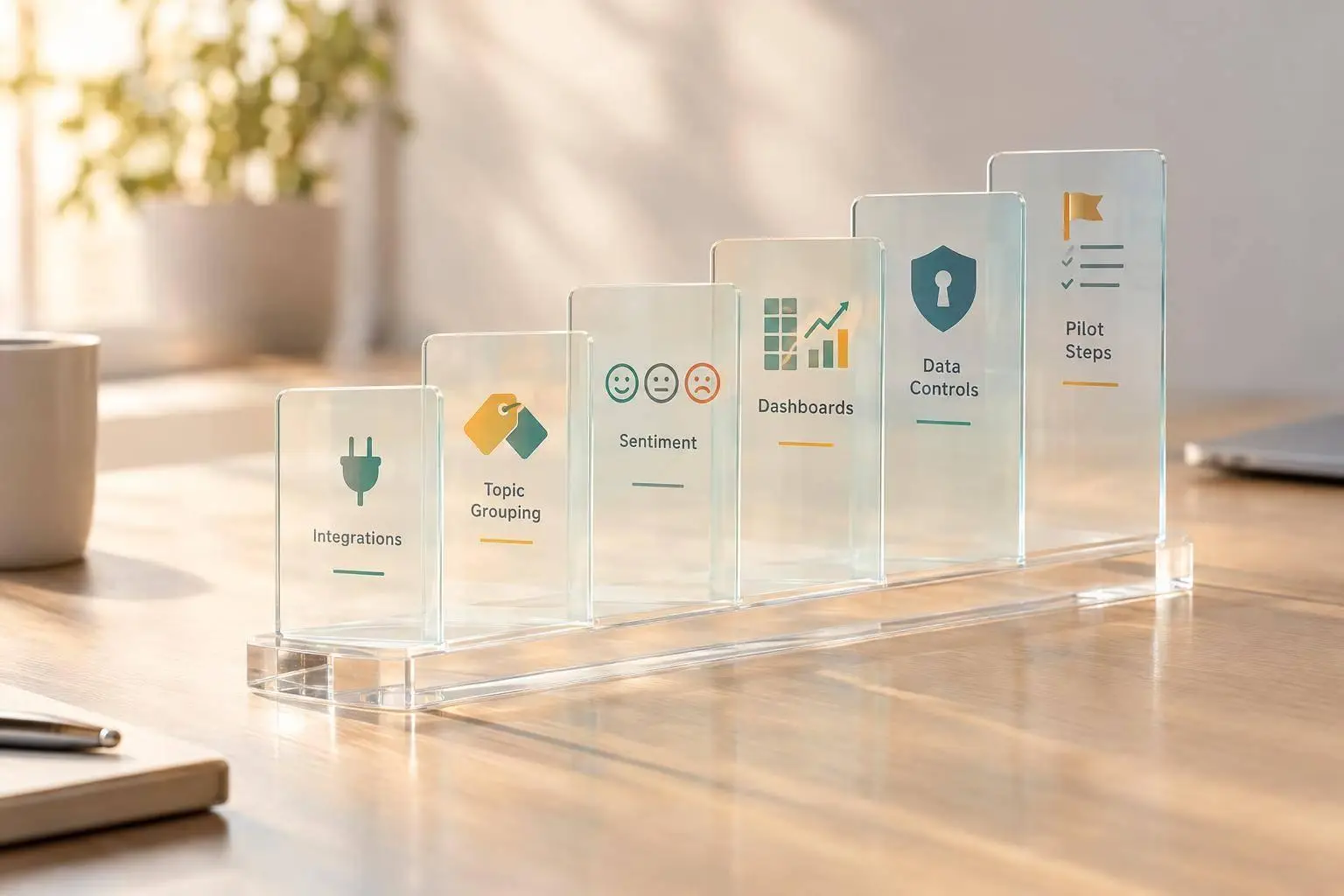
Weeks, Not Years: Automate Order to Cash With Agentic AI

Order-to-cash automation turns invoice-to-payment friction into predictable cash flow by automating invoicing, matching, and collections prioritization. The biggest payoff is faster cash: automated cash application and collections orchestration shrink days sales outstanding and cut manual exception work. Agentic AI, embedded banking feeds, and integration-ready ERPs now make this achievable in weeks rather than years.
TL;DR:
- Automate cash application first: bank feeds, remittance parsing, and lockbox integration reduce unapplied cash and give collectors current balances for prioritization.
- Pilot one clean customer segment or invoice type end to end, then track DSO and days to cash application against baseline within three months.
- Clean customer records, payment terms, and IDs before automation; inconsistent master data and overnight batch updates can undermine matching and delay cash application.
- Use continuously updated ERP and bank connections for cash application and collections, while scheduled imports may suffice for reporting but introduce compounding delays.
Table of Contents
- What the Order-to-Cash Cycle Includes: Stages and Responsibilities
- Where Cash Gets Stuck: Common Leakage Points and Root Causes
- Automation Opportunities Mapped to Each O2C Stage
- Technology and Integrations That Make O2C Automation Work
- KPIs and Dashboards to Measure O2C Automation Success
- A Practical Roadmap: Assess, Pilot, Measure, and Scale O2C Automation
- How Digital Fractal Approaches O2C Automation: Readiness, Pilots, and a Savings Calculator
- Change Management Strategies for Successful Adoption of O2C Automation
- Data Security and Compliance Considerations in Automating Order-to-Cash Workflows
- Examples or Case Studies Demonstrating Measurable Benefits From O2C Automation
- Integration Challenges and Solutions When Connecting Legacy Systems With Modern O2C Tools
- Author’s Point of View: Priority Areas and Quick Wins for Finance Leaders
- Ready to Automate Your Order-to-Cash Process?
- FAQ
- Sources
What the Order-to-Cash Cycle Includes: Stages and Responsibilities
Order-to-cash (O2C) is the full sequence of steps between a customer placing an order and your business collecting and reconciling the payment. Every stage has an owner, a handoff, and a point where data can get lost or corrupted if systems do not talk to each other.
A typical O2C cycle moves through these stages:
- Customer onboarding and credit setup: sales or credit teams capture customer data and set credit limits.
- Order capture: sales operations or e-commerce systems record order details and validate pricing.
- Fulfillment: operations or logistics teams confirm shipment or service delivery.
- Invoicing: billing teams generate invoices based on contract terms and delivery confirmation.
- Invoice delivery: billing or AR sends invoices through portals, EDI, or email.
- Cash application: AR matches incoming payments to open invoices.
- Collections: AR or credit teams follow up on overdue balances.
- Reconciliation and reporting: finance closes the loop with GL postings and management reporting.
Sales typically owns the first two stages, operations owns fulfillment, and billing or accounts receivable owns everything from invoicing through reconciliation. The handoffs between these groups are where most friction starts. A sales rep who enters an order with the wrong billing address, or a fulfillment team that confirms delivery a week late, pushes errors downstream into invoicing and collections, where they are far more expensive to fix.
Credit setup deserves particular attention because it shapes everything that follows. Teams that rely on manual credit checks or outdated customer files tend to extend terms they later have to walk back, which shows up as disputes and write-offs much later in the cycle. Automating this step with structured data and AI-assisted credit risk scoring reduces the odds that a bad account enters the pipeline in the first place.
Mapping these stages explicitly, with named owners for each handoff, gives finance leaders a shared reference point before they start automating. Without that map, automation projects tend to optimize one stage while ignoring the handoff that actually causes the delay.
Where Cash Gets Stuck: Common Leakage Points and Root Causes
Most revenue leakage in O2C happens after the invoice goes out, not before. That timing matters because it means the fix usually lives in process automation, not in sales or pricing changes.
The most common leakage points are:
- Late or incorrect invoices that trigger customer pushback before payment is even attempted.
- Missing or incomplete remittance information, which forces AR staff to manually guess which invoice a payment applies to.
- Slow cash application, where payments sit unapplied for days while staff chase documentation.
- Unresolved disputes that stall payment indefinitely until someone manually investigates.
- Deductions and reclaims, common in retail and distribution, where customers short-pay invoices for promotions, damages, or pricing discrepancies.
Each of these issues adds days to your cash cycle and increases the odds that a disputed or short-paid invoice eventually gets written off rather than collected. Deloitte’s working capital research points to applying agentic AI and workflow orchestration directly to collections and working capital management as the next lever for improving cash conversion, moving finance teams from reporting on problems to acting on them in real time.
Industry benchmarking from APQC gives finance teams a reference point for what “good” looks like across O2C sub-processes, which helps when deciding which leakage point to tackle first. Deduction and dispute management tends to be the most manual and the most overlooked, largely because it requires pulling information from emails, remittance advice, and ERP records that were never designed to talk to each other.
Automation Opportunities Mapped to Each O2C Stage
Automation works best when it is matched to the specific failure mode at each stage rather than applied as a blanket “digitize everything” initiative. Here is a practical, stage-by-stage breakdown.
- Order capture: Validate and ingest orders through APIs or structured EDI feeds instead of manual entry. This catches pricing errors and missing customer data before they propagate downstream, cutting entry-related exceptions significantly.
- Invoicing and delivery: Use e-invoicing and electronic invoice presentment and payment (EIPP) platforms with template-driven billing rules. Automated delivery confirmation ensures you know whether a customer actually received the invoice, not just that it was sent.
- Cash application: Automate matching using remittance parsing, direct bank feeds, and lockbox integration. This is typically the single highest-leverage automation because unapplied cash directly delays everything downstream, including accurate AR aging and collections targeting.
- Collections: Segment customers by risk and value, then automate reminder cadences and route high-priority accounts to collector queues. Agentic AI can recommend the next best action per account, such as a payment plan offer versus an escalation call, based on payment history patterns.
- Disputes and deductions: Automatically extract dispute reasons from emails, portals, and remittance data, then route them by type and dollar value against defined service-level agreements (SLAs). This replaces the manual triage that otherwise eats AR analyst time.
The expected benefit scales with how much manual judgment the step previously required. Order capture automation mostly reduces entry errors and rework. Cash application automation reduces the days between payment receipt and the funds showing as applied, often the biggest single DSO lever available. Collections automation does not just save time; it improves the odds of collecting at all, because overdue accounts that get consistent, timely follow-up are less likely to become write-offs.
Invoice data extraction is worth calling out separately, since it underpins both the invoicing and cash application stages. Structured data capture from invoices and remittance advice, including OCR-driven data extraction, reduces the manual re-keying that otherwise bottlenecks both ends of the cycle.
Pro Tip: Start automation with cash application, not collections. A faster match-to-cash process gives your collectors accurate, current account balances before you ask them to chase anyone.
Technology and Integrations That Make O2C Automation Work
Automation tools are only as good as the systems feeding them. Before selecting a vendor or building a custom workflow, finance leaders should confirm three things: how data moves between your ERP and the automation layer, how bank and payment data reaches your reconciliation process, and how clean your underlying master data actually is.
ERP integration generally follows one of two patterns. Real-time API integration keeps order, invoice, and payment status synchronized continuously, which matters most for cash application and collections, where stale data leads to wasted outreach. Scheduled batch imports work adequately for less time-sensitive reporting but introduce lag that compounds across the cycle. Either way, master data (customer records, payment terms, tax codes) needs to be clean and consistent before automation can reliably match transactions.
Bank feeds and embedded banking are changing how fast reconciliation happens. BMO Sync, launched in early 2025, embeds banking directly into ERPs and accounting systems so businesses get near-real-time bank feeds instead of manual file uploads. That kind of embedded connection, built for Canadian businesses, is a practical example of how automated payable and receivable workflows reduce the lag between a payment landing and your books reflecting it.
A few integration checks worth requiring before you commit to a tool:
- Confirm the vendor supports the payment rails your customers actually use, including wire, ACH, and card.
- Ask how reconciliation uses transaction metadata rather than relying on manual invoice-number matching alone.
- Verify data-residency and access controls meet your compliance requirements before data leaves your network.
- Check API documentation maturity; platforms with well-documented, tested APIs integrate far faster than those requiring custom middleware.
Practitioner reviews of integration platforms consistently point to connector depth and API reliability as the deciding factor in how fast an automation project actually ships.
Gartner Peer Insights, Workato reviews
KPIs and Dashboards to Measure O2C Automation Success
You cannot tell whether automation is working without a small set of metrics tracked consistently before and after each change.
The core KPIs worth tracking are:
- Days Sales Outstanding (DSO): the average number of days it takes to collect payment after a sale.
- Days to cash application: the gap between payment receipt and the payment being matched to an invoice in your system.
- Dispute rate: the percentage of invoices that generate a dispute or deduction.
- Collection effectiveness index (CEI): how much of the collectible AR you actually collected in a period.
- Cash conversion cycle (CCC) components: DSO alongside days inventory outstanding and days payable outstanding, where relevant to your business model.
Deloitte’s working capital analysis frames the next phase of cash conversion cycle improvement around applying AI-driven workflow orchestration to these metrics directly, rather than treating them as backward-looking reports. Process benchmarking resources from APQC can help you set realistic improvement targets for your industry and company size rather than guessing at what “good” looks like.
Assign a single owner, typically the AR or controllership lead, for the O2C dashboard and review it weekly during a pilot, then move to a monthly cadence once the process stabilizes. Build an escalation path for accounts that breach dispute or aging thresholds so exceptions get human attention before they become write-offs.
A Practical Roadmap: Assess, Pilot, Measure, and Scale O2C Automation
Automation projects that fail usually fail from trying to do too much at once. A staged rollout keeps risk low and makes the business case obvious before you ask for a bigger budget.
- Assess: Map your current O2C process end to end and evaluate data readiness across your ERP, billing system, and bank connections. A structured AI readiness audit at this stage identifies exactly where exceptions pile up and which integration gaps will block automation later.
- Pilot: Choose a narrow, well-defined scope, such as one customer segment or one invoice type, and automate it end to end rather than partially automating many processes at once.
- Measure: Agree on the KPIs that define success before the pilot starts, not after. DSO reduction and days-to-cash-application are the fastest signals that something is working.
- Scale: Once the pilot proves out, invest in governance for your automation bots and workflows, including version control for rule changes, along with structured training for the AR and billing staff who will work alongside the new process.
The most common pitfalls are scope creep, where a focused pilot quietly grows to cover every customer and invoice type before anyone validates the first one, and skipping master data cleanup, which guarantees that even well-built automation produces mismatched or rejected transactions.
Pro Tip: Run your pilot on a customer segment with clean payment history first. It proves the automation works before you test it against your messiest, highest-dispute accounts.
How Digital Fractal Approaches O2C Automation: Readiness, Pilots, and a Savings Calculator
We start every O2C automation engagement with our AI Readiness Audit, which maps your current process, flags where exceptions concentrate, and identifies integration gaps between your ERP, billing system, and bank feeds before any automation work begins.
That audit typically surfaces:
- A clear process map showing where orders, invoices, and payments actually flow today versus how they are documented.
- The specific stages generating the most manual exceptions, often cash application or dispute handling.
- Integration gaps between systems that would block automated matching or reconciliation.
From there, we scope tailored workflow automation built around your actual systems and customer base, aiming for measurable outcomes within a 90-day implementation window rather than an open-ended consulting engagement. The automation solutions are customized to the workflows, systems, and goals identified in the audit rather than generic, off-the-shelf products.
To help quantify the potential impact before committing to a project, we built a Workflow Automation Savings Calculator that estimates time and cost savings based on your current manual process volume.
Change Management Strategies for Successful Adoption of O2C Automation
Automation projects stall more often from people resistance than from technology limitations. AR and billing staff who have handled exceptions manually for years tend to distrust a system that suddenly reroutes their work, especially if they were not part of deciding how it should behave.
The strongest adoption strategies start by involving the AR and collections team in defining the automation rules, not just rolling out a finished tool to them. Staff who helped write the dispute-routing logic are far more likely to trust it when an edge case comes up. Pair that with visible, early wins: showing collectors that their account queues are now prioritized by real payment risk, rather than alphabetically or by whoever complained loudest, builds buy-in quickly.
Training needs to go beyond a single rollout session. Plan for a period where staff can flag exceptions the automation handled incorrectly, and treat that feedback as a tuning input rather than a failure. Leadership sponsorship matters too: a pilot championed only by IT or finance leadership, without a visible AR team member as a co-owner, tends to get quiet pushback that shows up as workarounds rather than open objections.
Data Security and Compliance Considerations in Automating Order-to-Cash Workflows
O2C automation moves sensitive financial data, customer payment details, banking information, and credit histories, through more systems than your manual process ever touched, which raises the stakes on access control and data handling.
Before connecting any automation layer to your ERP or bank feeds, confirm how data is encrypted in transit and at rest, and who within your automation vendor’s organization can access customer payment data. Role-based access controls should mirror what you already enforce internally: a collections agent should see payment history for their accounts, not your full customer ledger.
Data residency matters for Canadian businesses working with international vendors; know where your data is physically stored and whether that satisfies your own compliance obligations, since requirements vary by industry and customer contract. Retain audit trails for every automated decision, including which rule routed a dispute or which bot applied a cash match, so you can reconstruct what happened if a customer or auditor questions a transaction later. Building this into the automation design from the start costs far less than retrofitting it after a compliance review flags a gap.
Examples or Case Studies Demonstrating Measurable Benefits From O2C Automation
Document-heavy, regulated workflows offer a useful parallel for what O2C automation can achieve. In Canadian mortgage brokering, platforms like Autowrite automate document intake, classification, and data extraction so brokers spend less time re-keying underwriting information and more time on decisions that actually require judgment, while still meeting Canadian data residency requirements. The pattern mirrors what automated invoice and remittance extraction does in O2C: it removes the repetitive capture step so skilled staff can focus on exceptions and relationships.
On the collections side, giving customers faster, more flexible ways to pay shortens the cycle before automation even touches the back office. Tools like Soclo Payments, which let small businesses generate payment links, show how reducing friction at the point of payment, not just in back-office matching, speeds up the whole cash cycle.
Within O2C specifically, the clearest measurable wins tend to cluster around cash application speed and dispute resolution time, since both stages previously depended almost entirely on manual document review. Automating the document and matching layer in these workflows consistently shows up as fewer days between an event (a payment or a dispute filing) and its resolution, which is the same lever that drives DSO improvement in O2C.
Integration Challenges and Solutions When Connecting Legacy Systems With Modern O2C Tools
Legacy ERPs and billing systems were rarely built with modern API integration in mind, and that gap is the most common reason O2C automation projects run over budget or stall mid-implementation.
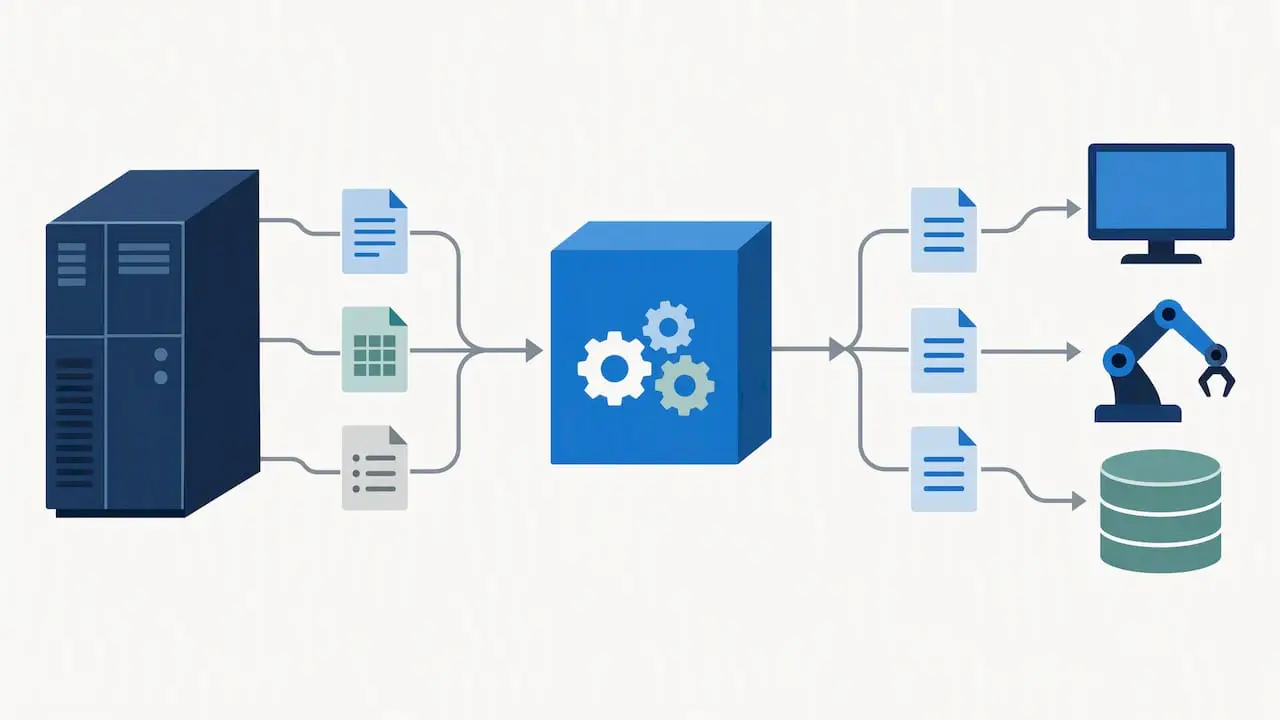
The most frequent challenge is data format mismatch: a legacy system might store customer records, payment terms, or invoice statuses in formats that a modern automation platform cannot read directly, requiring a middleware layer to translate between them. Batch-oriented legacy systems that only update overnight also create a lag problem for any automation that depends on near-real-time status, particularly cash application.
The practical solution is rarely a full ERP replacement. Most organizations get further, faster, by building an integration layer, whether custom middleware or a platform like the ones reviewed on Gartner, that sits between the legacy system and the automation tools, normalizing data formats and handling the translation work. Running a focused pilot against one legacy data source, before connecting every system at once, also surfaces format and timing issues while the stakes are still low.
Master data cleanup is the unglamorous but necessary precursor to any of this. Automation layered on top of inconsistent customer IDs or duplicate records just automates the confusion faster.
Author’s Point of View: Priority Areas and Quick Wins for Finance Leaders
If you only automate one thing this quarter, make it cash application. It is the stage most finance leaders underestimate, because it feels like back-office plumbing rather than a strategic lever, but a faster match-to-cash process improves every downstream metric: cleaner AR aging, better-targeted collections, and a real-time view of actual cash position.
Start with your highest-value customer segment, not your messiest one. A clean pilot proves the model works and gives you a credible result to bring to leadership before you tackle the accounts full of disputes and deductions.
Two concrete moves for the next 90 days: run a data readiness check on your top three customer accounts’ payment and remittance formats, and pick one invoice type to automate end to end rather than spreading effort across the whole portfolio.
— Souhail
Ready to Automate Your Order-to-Cash Process?
If the biggest gap in your cash cycle is unapplied payments, slow dispute resolution, or collections teams working from stale account data, those are exactly the problems a focused automation pilot solves, usually faster than a full ERP overhaul would.
We start with an AI Readiness Audit to map your current process and pinpoint where cash is actually getting stuck, then scope a workflow automation pilot built around your systems rather than a generic template. Before you commit to a project, run your numbers through our Workflow Automation Savings Calculator to see what faster cash application could be worth to your business this year.
This article is general information, not a substitute for advice from a qualified financial advisor. Consult a qualified financial professional about your own circumstances before acting on anything here.
FAQ
What is the O2C process in finance?
Order-to-cash (O2C) is the end-to-end process covering every step from a customer placing an order through your business collecting and reconciling payment. It includes order capture, fulfillment, invoicing, cash application, collections, and reconciliation, with handoffs between sales, operations, and finance teams at each stage.
How do you automate invoice processing?
Invoice processing automation typically combines e-invoicing or EIPP platforms, template-driven billing rules, and automated delivery confirmation so you know an invoice reached the customer. Pairing this with automated data extraction from incoming remittance and payment documents removes most of the manual re-keying that slows down matching.
What are the key KPIs for the order-to-cash process?
The core KPIs are Days Sales Outstanding (DSO), days to cash application, dispute rate, and the collection effectiveness index (CEI). Together these show how quickly you convert sales into collected cash and where exceptions are concentrated in the cycle.
What is the difference between order-to-cash and procure-to-pay?
Order-to-cash (O2C) covers the process of selling to a customer and collecting payment, while procure-to-pay (P2P) covers the reverse: purchasing goods or services and paying your own suppliers. They sit on opposite sides of the same working capital equation, with O2C driving cash inflows and P2P driving cash outflows.
How long does it take to see results from O2C automation?
A focused pilot on one customer segment or invoice type can show measurable DSO and cash application improvements within a 90-day implementation window. Results depend on how clean your underlying master data is and how quickly your team adopts the new workflow.