


Our Customers

client-logo client-logo client-logo client-logo

Production Readiness Is More Than Deployment

Production readiness turns a working prototype into an application that can be deployed, observed, supported, and recovered with confidence.

Before launch, teams need to validate architecture, access controls, data handling, integrations, testing, deployment, monitoring, incident response, and rollback paths.

Digital Fractal helps organizations identify release blockers, prioritize remediation, and define an operating model for web, mobile, AI-assisted, and internal business applications.

Related Production Readiness Services and Work

Some prototypes need targeted remediation. Others need structured redevelopment by a custom software development team that can preserve the useful product idea while replacing fragile implementation choices.

When the product uses AI, production readiness also depends on model behaviour, data boundaries, human oversight, failure handling, and integration with the surrounding business process. Our AI consulting services help teams examine those decisions before they scale a fragile proof of concept.

Production readiness does not end at launch. Teams also need reliable hosting and ongoing application support, including monitoring, backups, maintenance, and incident response as the application and its dependencies change.

See our application projects to understand the kinds of operational workflows, mobile experiences, and custom systems Digital Fractal has delivered across different business contexts.

Production Readiness Review Areas

Architecture & Release Environments

Review hosting architecture, environments, deployment controls, configuration, backups, scaling, and recovery before launch.

Security, Testing & Observability

Validate access controls, data handling, dependency risk, test coverage, logging, monitoring, alerting, and incident visibility.

Launch & Support Readiness

Confirm runbooks, ownership, incident response, rollback, maintenance responsibilities, and post-launch support before release.

Applications We Can Maintain

Web Applications

Business portals, internal systems, customer platforms, SaaS applications, and enterprise software.

Mobile Applications

iOS, Android, Flutter, React Native, and cross-platform mobile applications.

AI Applications

AI agents, workflow automation, chatbots, AI integrations, and AI-powered business systems.

Cloud Infrastructure

Microsoft Azure, AWS, Google Cloud, DigitalOcean, and private hosting environments.

APIs & Integrations

CRM systems, ERP platforms, payment gateways, identity providers, and third-party integrations.

Legacy Applications

Existing business software requiring modernization, stabilization, ongoing maintenance, or operational support.

Production Readiness Process

How the Production Readiness Review Works

02 — Risk & Gap Analysis

Identify release blockers, operational gaps, security risks, weak recovery paths, and unclear ownership before production deployment.

04 — Launch & Operating Handoff

Confirm runbooks, monitoring, incident response, rollback, maintenance responsibilities, support boundaries, and operational ownership before launch.

01 — Current-State Review

Review architecture, data flows, integrations, environments, deployment controls, security, observability, recovery, and operating responsibilities.

03 — Remediation & Release Plan

Prioritize fixes, validation, deployment controls, rollback criteria, and launch sequencing so teams know what must change before release.

Production Readiness Priorities

Architecture & Deployment

Build a Reliable Release Foundation

Review how the application is assembled, configured, deployed, scaled, and recovered before production traffic depends on it. The assessment identifies architectural constraints and release risks that may not be visible in a working prototype.

  • Production architecture, service boundaries, dependencies, and integration points
  • Development, staging, and production environment separation
  • Configuration, secrets, access, deployment approvals, and change controls
  • Capacity assumptions, performance bottlenecks, backups, rollback, and recovery

Deliverable: prioritized architecture and release findings with remediation actions and launch criteria.
Security, Testing & Quality

Validate the Controls That Protect the Release

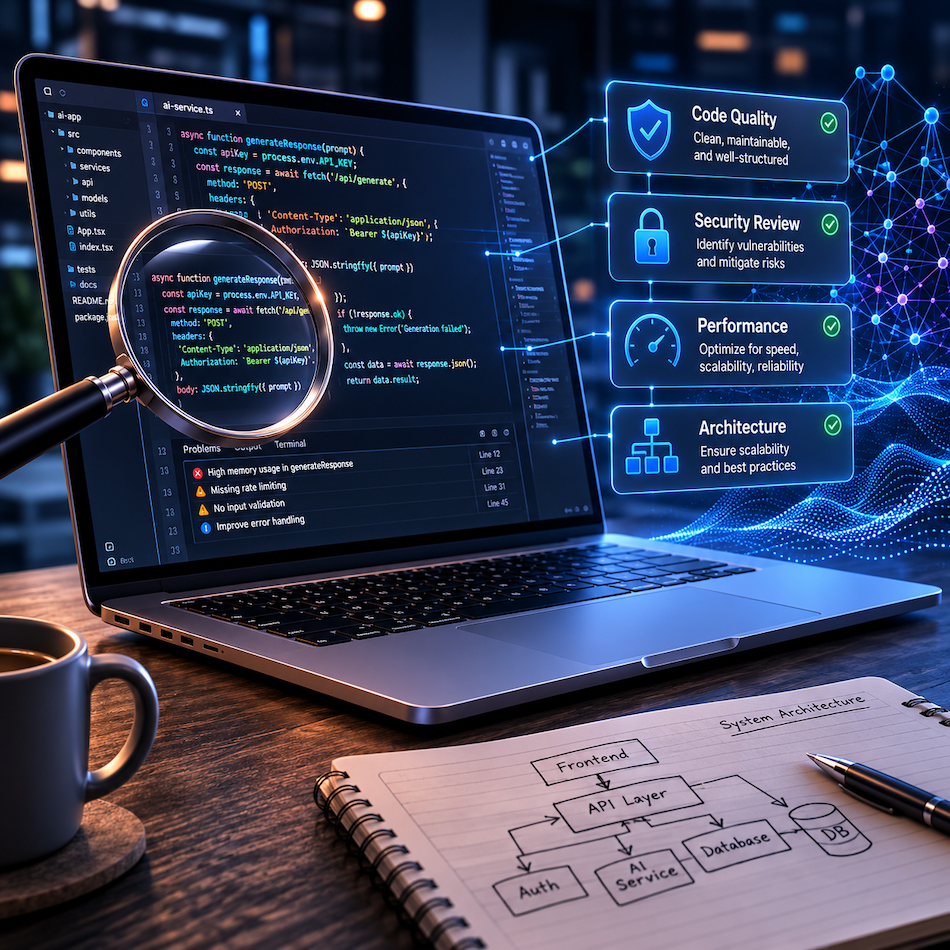
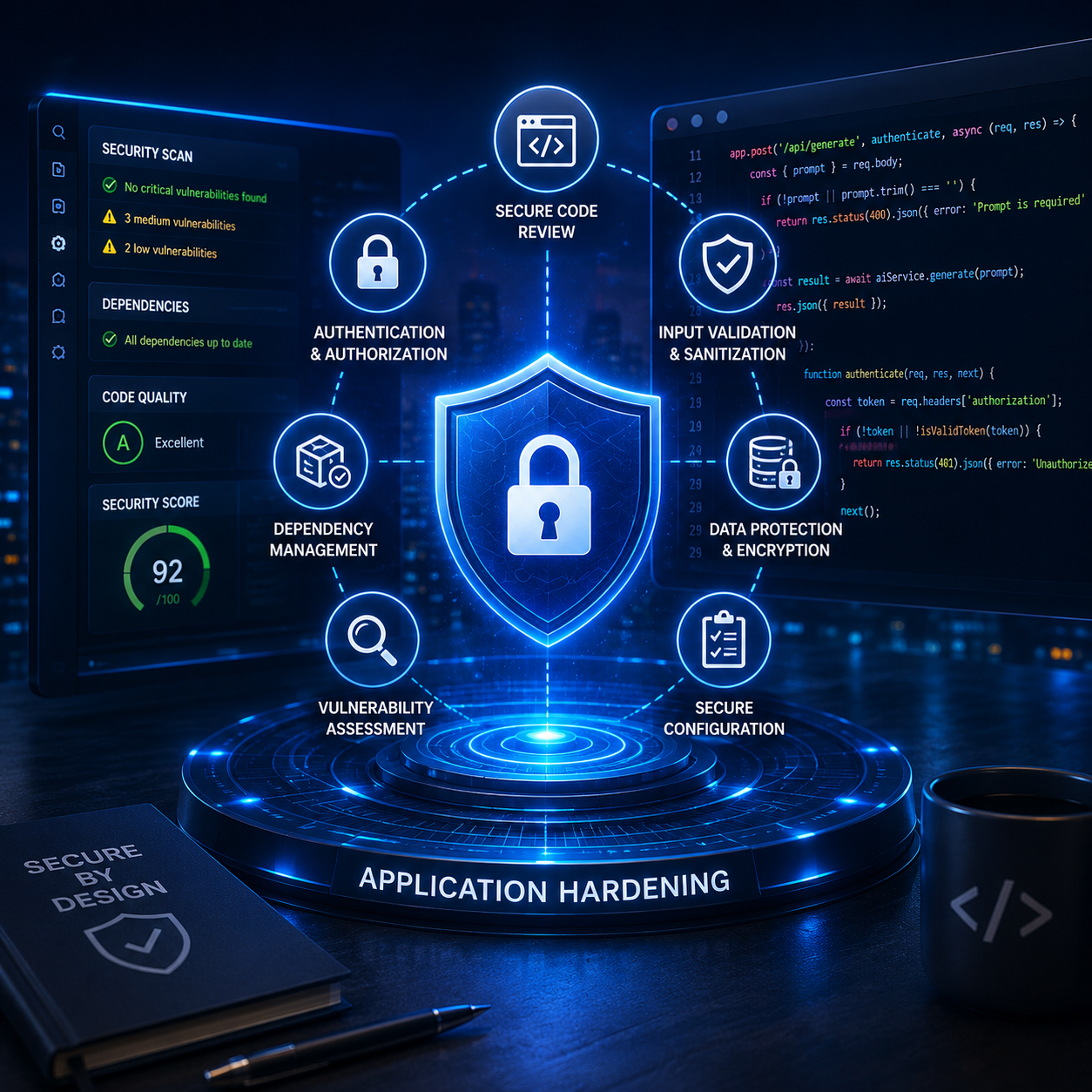
Examine the controls that protect users, data, integrations, and critical workflows. Testing should reflect the application's intended use and highest-risk failure modes—not only whether the happy path works.

  • Authentication, authorization, privileged access, data handling, and auditability
  • Dependency, API, integration, input-validation, and error-handling risks
  • Functional, regression, performance, security, and failure-recovery coverage
  • AI-specific evaluation, output handling, human oversight, and fallback controls where applicable

Deliverable: a risk-ranked validation plan with evidence gaps, acceptance criteria, and release blockers.

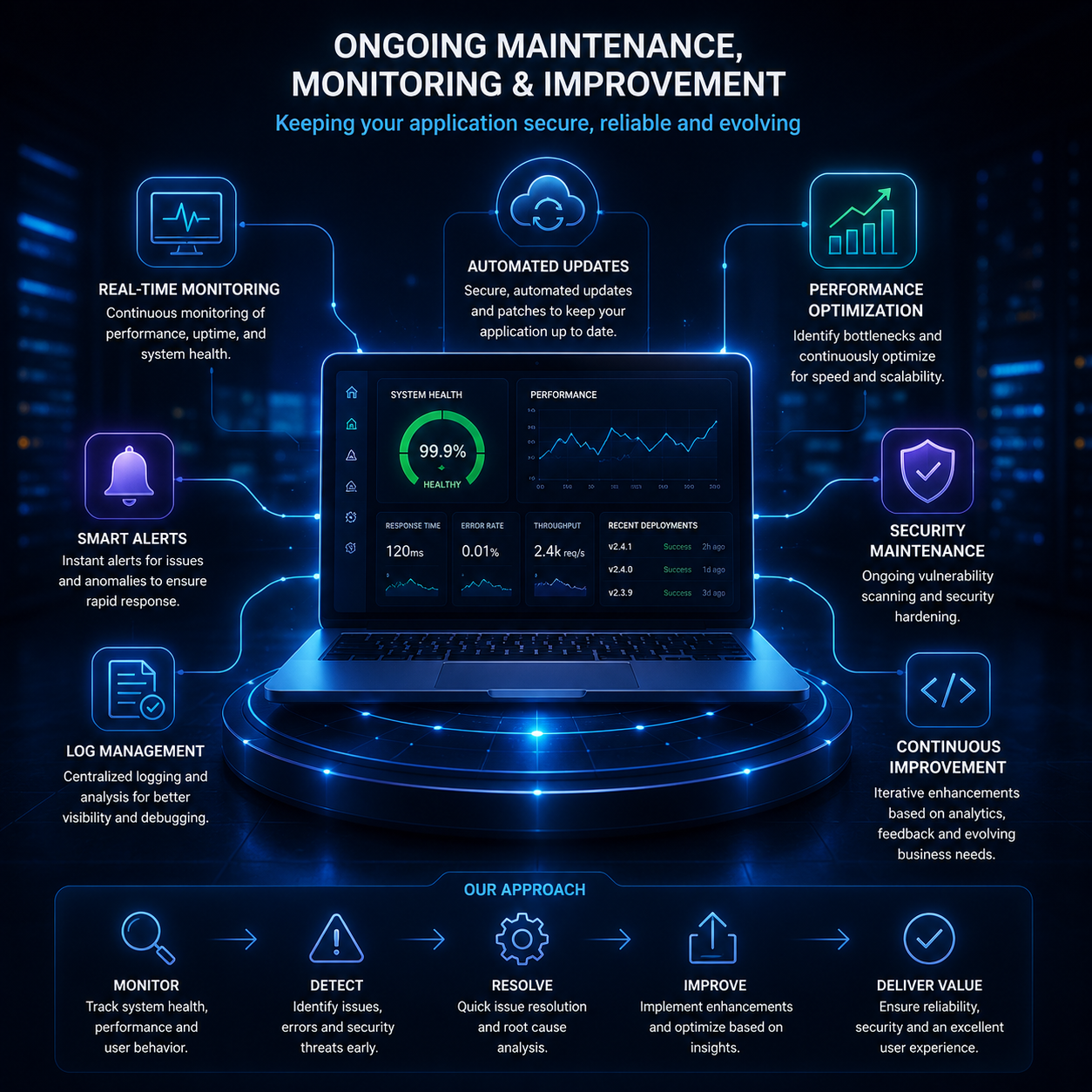
Monitoring & Operating Readiness

Prepare the Team to Operate the Application

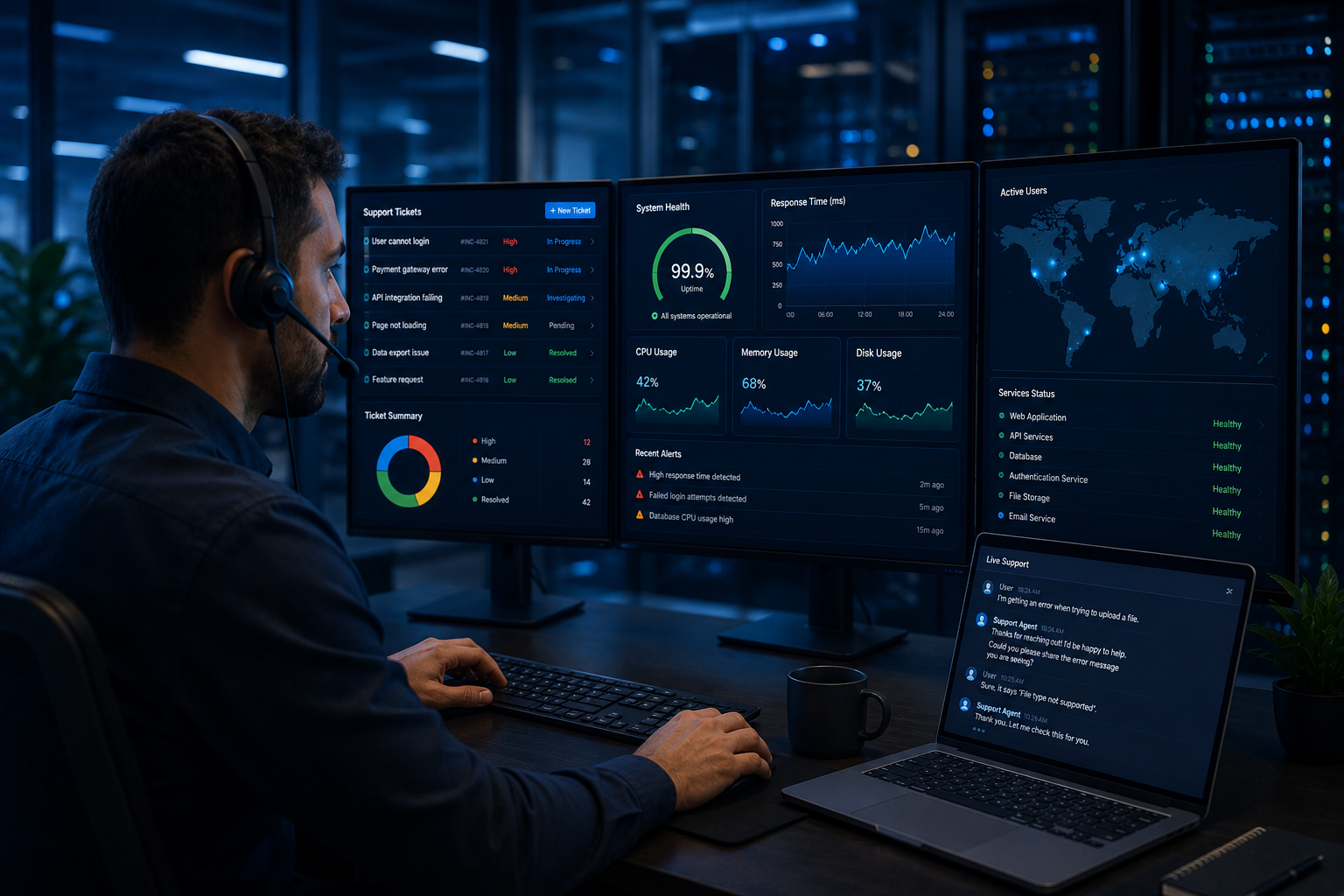
Confirm that the organization can detect problems, respond consistently, recover safely, and understand who owns each operational decision after launch. Production readiness ends with a workable operating model, not merely a successful deployment.

  • Logs, metrics, traces, alerts, dashboards, and service-health visibility
  • Incident triage, escalation, communication, recovery, and rollback procedures
  • Runbooks, maintenance responsibilities, vendor boundaries, and support ownership
  • Post-launch review, change control, security updates, and improvement priorities

Deliverable: an operating-readiness checklist with ownership, monitoring requirements, response paths, and handoff actions.

Production Readiness Outcomes

What Production Readiness Improves

Clearer Decisions. Lower Launch Risk. Stronger Operations.

Improved Reliability

Keep applications available, secure, and performing consistently through proactive monitoring and maintenance.

Reduced Operational Risk

Minimize downtime, security vulnerabilities, failed deployments, and compatibility issues before they affect users.

Clear Operational Ownership

Define who owns monitoring, incidents, maintenance, security updates, recovery, and future improvements after launch.

AI Application Production Readiness FAQs

No. We regularly assume responsibility for applications built by other software vendors, contractors, internal teams, or AI-assisted development tools.


Yes. We can host applications in public cloud platforms, private cloud environments, or customer-owned infrastructure.


Monitoring and support packages can be tailored to your operational requirements and service-level expectations.

Yes. We help assess, stabilize, secure, monitor, and maintain AI-generated applications as they move into production environments.


Yes. We provide flexible monthly managed service agreements covering maintenance, monitoring, security updates, technical support, and ongoing development.

Prepare Your Application for Production

Before launch, identify the gaps that could undermine reliability, security, recovery, or support. Digital Fractal can assess the application, prioritize remediation, and define a practical release and operating plan.