Use C$10M NRCan Funding to Start AI Pilots in Canada’s Oil Sands

AI in oil sands operations now drives measurable gains in equipment uptime, haul truck safety, and energy intensity per barrel. Suncor runs the largest autonomous haul truck fleet in the country, Imperial has automation programs across its sites, and Natural Resources Canada committed C$10 million in 2025 to push these systems further. The practical move for most operators is to run a narrow pilot in predictive maintenance or dispatch, not an enterprise-wide rollout.
TL;DR:
- AI-driven predictive maintenance can significantly reduce unplanned downtime and lower per-unit maintenance costs in critical equipment.
- Autonomous haul trucks and route optimization improve fuel efficiency, safety, and operator safety by removing high-risk tasks from humans.
- Funding programs like NRCan’s C$10 million AI energy innovation call prioritize applications that demonstrate measurable emissions reductions and operational performance.
- Successful AI pilots require rigorous data standardization, stakeholder involvement, and staged deployment to avoid costly failures or safety issues.
- Future AI trends such as edge computing and more explainable models will enhance real-time safety and emissions management in remote oil sands environments.
Table of Contents
- Current state of AI adoption in Canada’s oil sands
- Where AI delivers the most value: specific use cases
- The measurable business case for operators
- Practical roadmap: from AI readiness to scaled operations
- Main risks and how to manage them
- Our work on AI readiness for energy operators
- Regulatory and environmental compliance implications when deploying AI in oil sands operations
- Cybersecurity considerations for AI systems in critical oil sands infrastructure
- Stakeholder and Indigenous community engagement related to AI adoption in oil sands projects
- Future trends in AI relevant to oil sands, including potential advances in machine learning and edge computing
- What matters most if you’re deciding whether to invest
- Get a practical starting point: the AI Readiness Audit
- FAQ
- Sources
Current state of AI adoption in Canada’s oil sands
Oil sands operators have moved past the experimentation phase. Suncor has deployed and continues to expand its autonomous haul truck fleet, reporting gains in both safety and productivity where the trucks run. Imperial Oil has pursued its own automation initiatives across extraction and logistics, reflecting a broader industry pattern: automation that started as isolated, single-site tests is becoming a standard part of how large operators plan mine and plant expansions.
Government funding has accelerated this shift. The NRCan AI energy innovation call puts C$10 million behind applied research that advances technology readiness levels and demonstrates real operating improvements, with emissions reduction as an explicit target rather than a side benefit. That funding signal matters because CERI’s modelling of oil sands production and emissions shows the sector trending toward the 100 MtCO2eq cap, which puts pressure on every operator to find efficiency gains that also cut carbon intensity.
A few patterns stand out in how adoption is unfolding:
- Point solutions (a single predictive maintenance tool, one autonomous haul route) are giving way to platform-level integration across mine, plant, and dispatch systems.
- Capital-intensive automation, like autonomous haulage, is now a planning assumption for new fleet purchases rather than a pilot curiosity.
- Public funding programs are lowering the cost of testing production-grade AI before a full capital commitment.
Where AI delivers the most value: specific use cases
Not every AI application in oil sands operations produces the same return. A handful of use cases account for most of the documented value.
- Predictive maintenance: Sensor fusion and anomaly detection on rotating equipment catch early failure signatures, shortening mean time to repair and extending mean time between failures on critical assets like pumps and compressors.
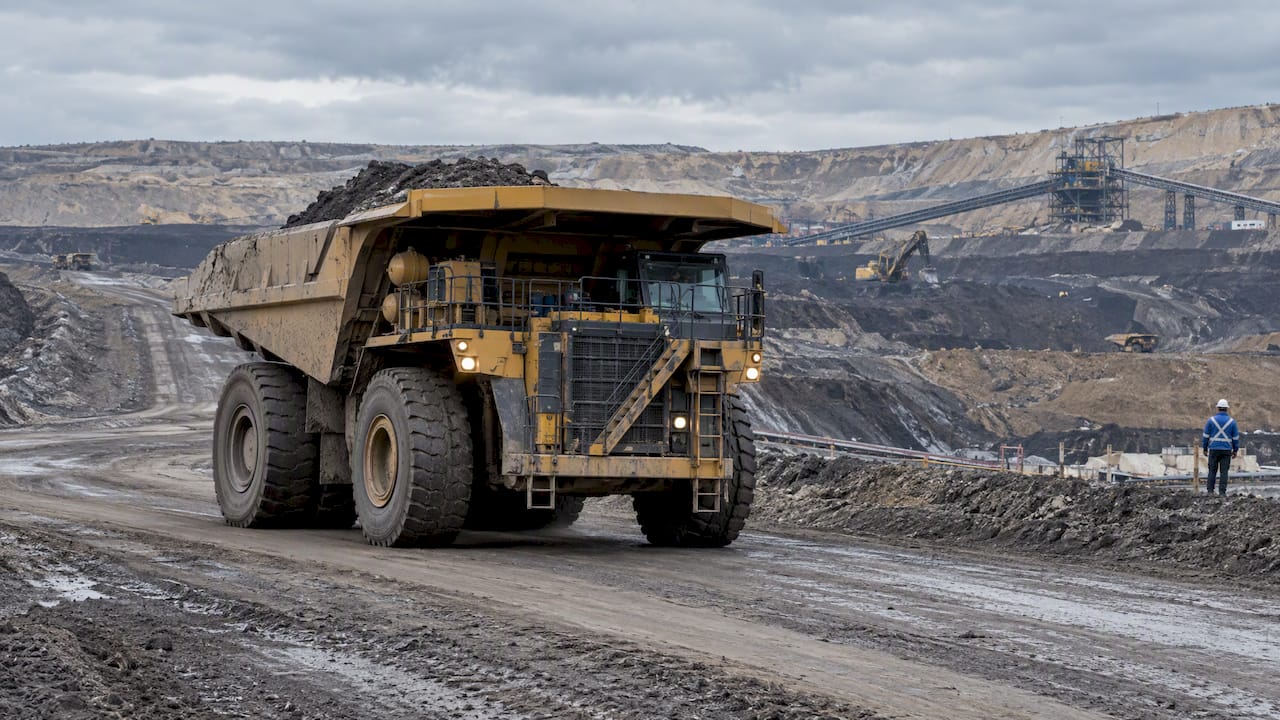
- Autonomous haulage and dispatch optimization: Autonomous trucks and AI-driven dispatch reduce haul cycle variability, improve fuel efficiency through better routing, and remove operators from some of the highest-risk tasks on site, which is central to Suncor’s autonomous fleet expansion.
- Process optimization: Machine learning paired with advanced process control can reduce steam-to-oil ratio in SAGD operations and improve froth treatment recovery, which academic analysis of integrated oil sands technologies identifies as a higher-value target than automating isolated tasks.
- Digital twins: Virtual models of mine plans, plant circuits, and emissions sources let engineering teams test scenarios before committing capital, particularly useful for planning around the national emissions cap.
- Safety analytics: Machine learning applied to incident reports can classify risk patterns and surface leading indicators long before they become recordable incidents, and drone-based inspection extends coverage into areas that are costly or hazardous to inspect manually.
Pro Tip: Start predictive maintenance pilots on equipment with the highest unplanned downtime cost, not the equipment with the most available sensor data.
The measurable business case for operators
The financial case for AI in oil sands operations rests on a narrow set of KPIs: equipment uptime, maintenance cost per unit of production, haul truck utilization, and energy intensity per barrel. Operators running predictive maintenance programs typically see better equipment availability and lower unplanned downtime, which can flow directly into lower cost per barrel.
NRCan’s funding structure ties its C$10 million AI energy innovation call to technology readiness advancement and validated emissions reductions, which means pilot projects that demonstrate real performance gains have a funding path that reduces the capital risk of testing production-grade systems.
That matters against the backdrop CERI’s oil sands modelling lays out: production growth pushing the sector toward its emissions ceiling means technology that lowers both supply cost and steam-to-oil ratio delivers value on two fronts at once, not just one. For a decision-maker weighing a pilot, the funding and the emissions trajectory together make a reasonable case for moving now rather than waiting for the technology to mature elsewhere first.
Practical roadmap: from AI readiness to scaled operations
Moving from interest to a working pilot follows a fairly consistent sequence across operators that have done it successfully.
- Run an AI readiness audit. Map your data sources, sensor coverage, and stakeholder groups, and define the two or three metrics the pilot needs to move before anyone calls it a success.
- Design a contained pilot. Pick a use case with clear safety boundaries and a defined blast radius, such as predictive maintenance on a single equipment class, documented in our Alberta predictive maintenance work.
- Build the data foundation. Standardize incident reporting, confirm telemetry quality, and validate models against held-out data before trusting their output.
- Integrate with existing systems. Connect carefully to SCADA and DCS infrastructure, keeping IT and OT networks separated, and build runtime monitoring so a model failure never silently becomes an operational failure.
- Scale deliberately. Lock in a procurement model, retrain the workforce whose jobs the system touches, and keep long-term monitoring in place after the initial excitement fades.
A few things make or break that sequence:
- Treat the readiness audit as a gating step, not a formality: a weak data foundation guarantees a weak pilot.
- Keep pilots small enough that a bad result costs little and teaches a lot.
- Involve the control room and maintenance teams early, since their buy-in determines whether a system gets used after launch.
Our construction predictive maintenance pilot framework uses a similar staged approach that transfers well to oil sands equipment fleets.
Main risks and how to manage them
The biggest technical risk is data quality: sparse sensor coverage or inconsistent incident reporting produces models that look fine in testing and fail in the field. Standardizing data collection before training any model avoids most of this.
Safety verification matters just as much in high-consequence systems like autonomous haulage. Staged trials with human-in-the-loop controls and engineering safeguards, the same approach Suncor’s reporting on its automated fleet rollout describes, let operators catch problems before they scale across a whole fleet.
- Build a transparent job-transition plan before automation displaces roles, not after.
- Require vendors to explain how their models reach a decision, not just what the decision is.
- Ask for Canadian-market references, since cold-climate operations behave differently than warm-climate pilots.
- Treat worker training as part of the project budget, not an afterthought.
Pro Tip: Ask any AI vendor for a field-proven reference site operating in similar winter conditions before signing a pilot agreement.
Our work on AI readiness for energy operators
We built our AI Readiness Audit around the same questions oil sands operators face: where is the data, what systems need to connect, and which pilot will prove value fastest. Our Alberta predictive maintenance analysis reflects the operational realities of running AI programs in Western Canadian energy infrastructure.
Regulatory and environmental compliance implications when deploying AI in oil sands operations
Deploying AI in oil sands operations does not remove any existing regulatory obligation. Emissions reporting, water management, and tailings monitoring requirements still apply regardless of whether a human or a model flags the underlying data. What changes is the opportunity to meet those obligations more precisely: process optimization models that reduce steam-to-oil ratio directly reduce the fuel burned per barrel of bitumen, which CERI’s technical analysis ties to meaningful cuts in fuel-derived emissions from in situ production.
Operators integrating AI into emissions-relevant processes should document model validation the same way they document any engineering change, since regulators reviewing emissions performance will want to see that a model’s outputs were tested against known conditions before being trusted operationally. This is particularly relevant as the sector approaches the emissions cap discussed in CERI’s oil sands outlook, where credible, auditable emissions data becomes a compliance asset rather than a reporting burden.
AI systems that touch safety-critical or environmentally regulated processes also need a clear chain of accountability. If a model recommends an operating setpoint change, someone needs to own the decision to implement it, and that approval needs to be traceable. Building this into the pilot design from the start avoids a scramble later when a regulator or auditor asks how a given operating decision was made.
Cybersecurity considerations for AI systems in critical oil sands infrastructure
AI systems connected to control infrastructure expand the attack surface of an oil sands site. A model that ingests live sensor data and feeds recommendations back into a dispatch or process control system creates a new pathway that did not exist when those systems ran in isolation.
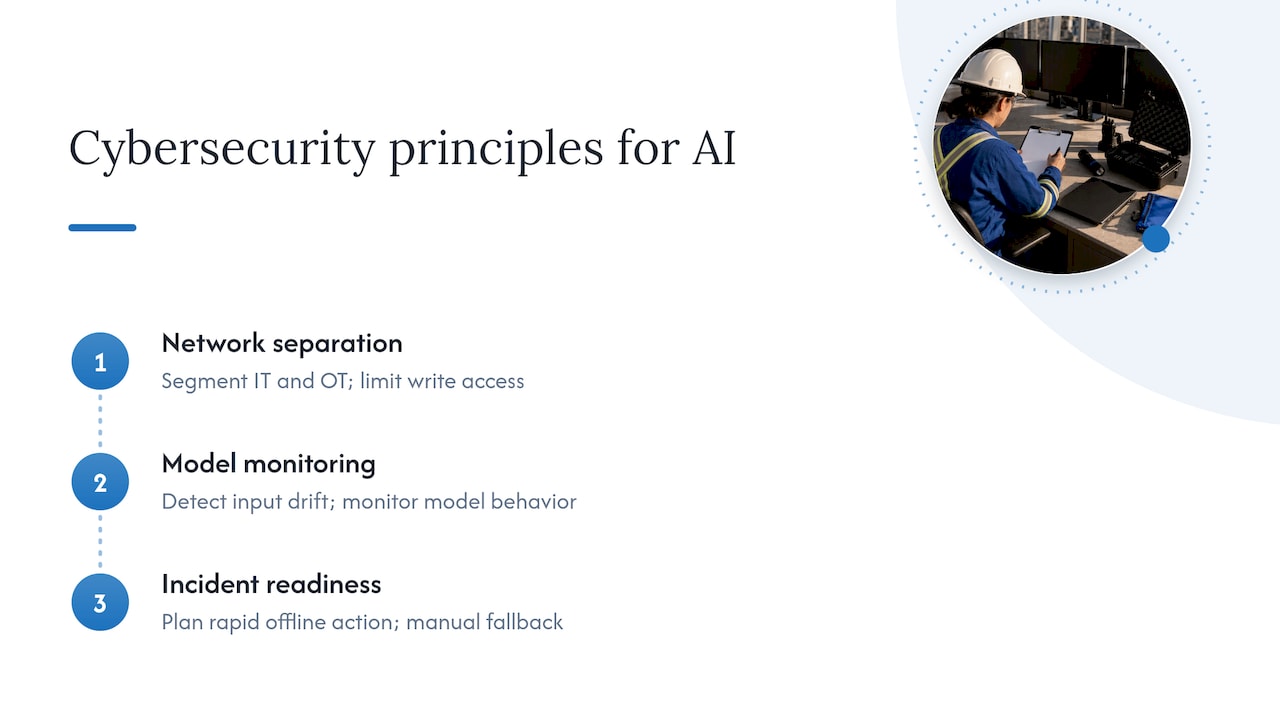
The first principle is separation: keep IT and OT networks segmented, and treat any AI system with write access to operational controls as a critical asset requiring the same scrutiny as the SCADA or DCS system it touches. Read-only analytics systems carry far less risk than systems with authority to change a setpoint or redirect a haul truck.
The second principle is monitoring the model itself, not just the network around it. Runtime monitoring should flag when a model’s inputs drift outside the range it was trained on, since a model fed corrupted or manipulated sensor data can produce confidently wrong recommendations without any obvious network intrusion. Vendor contracts should specify how model updates are tested and deployed, since an unreviewed update pushed to a production system is itself a security exposure.
Finally, incident response plans built for traditional OT security need an AI-specific addendum: what happens operationally if a model has to be taken offline immediately, and can the system it supports run safely on manual control in the interim. Any pilot that cannot answer that question clearly is not ready for a safety-relevant deployment.
Stakeholder and Indigenous community engagement related to AI adoption in oil sands projects
Oil sands projects operate on land where Indigenous communities hold treaty rights and long-standing environmental interests, and AI adoption does not change that relationship. Automation projects that affect emissions monitoring, water management, or land disturbance patterns are relevant to the same consultation processes that apply to any operational change on these sites.
Engagement works best when it happens before a system is deployed, not after. Communities with questions about how autonomous haulage affects traffic patterns, how emissions models are validated, or how safety incidents are tracked deserve clear, non-technical explanations of what the system does and does not do. A model that claims to reduce emissions intensity should be able to show its validation data to a community stakeholder group in plain terms, not just to a regulator.
Workforce composition is part of this conversation too. Automation changes which jobs exist on a site, and Indigenous employment commitments tied to many oil sands projects mean that job transition planning needs to account for how automation affects training and hiring pipelines, not just total headcount. Operators that treat this planning as a late-stage communications task rather than an early design input tend to face more resistance once a pilot moves toward a full rollout.
Future trends in AI relevant to oil sands, including potential advances in machine learning and edge computing
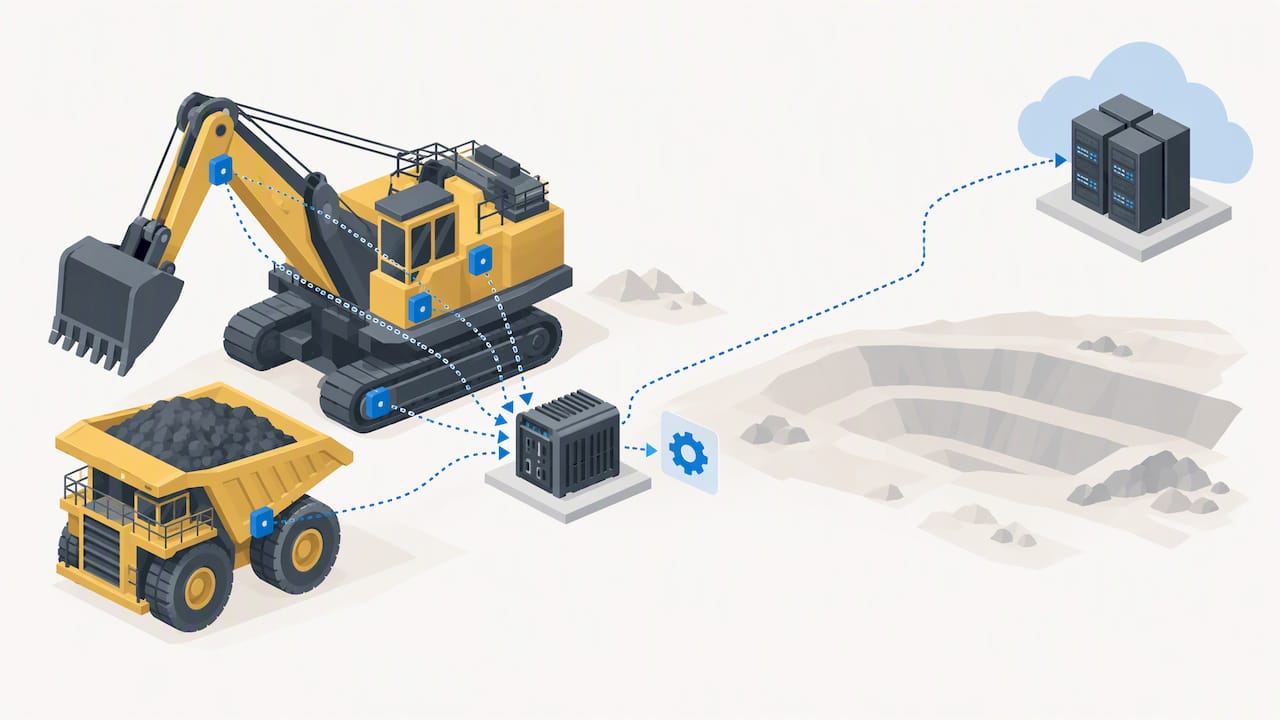
The next wave of AI in oil sands operations is likely to push more computation to the edge, closer to the sensors and equipment generating data. Edge computing reduces the lag between a sensor reading and a model’s response, which matters for safety-critical applications like autonomous haulage where a cloud round-trip delay is not acceptable.
Machine learning models themselves are getting better at explaining their own reasoning, which addresses one of the biggest adoption barriers in high-consequence industrial settings: an operator who cannot see why a model made a recommendation is unlikely to trust it during an abnormal situation. Industry reporting on AI-driven process control points toward system-level interventions, like dynamic limit diagrams paired with ML-informed control, that depend on strong instrumentation and continuous governance rather than a single clever algorithm.
Digital twins are also likely to become more dynamic, moving from static planning tools toward live models that update continuously as operating conditions change, which supports faster scenario testing for both production planning and emissions modelling. None of this removes the need for the fundamentals: clean data, clear accountability, and staged rollouts remain the foundation any of these advances get built on.
What matters most if you’re deciding whether to invest
The industry conversation around AI in oil sands operations tends to oversell the autonomous truck headline and undersell the unglamorous work: data standardization, incident report cleanup, and the governance structure around model validation. Those boring fundamentals determine whether a pilot succeeds far more than which vendor’s algorithm you choose. Operators who skip the readiness work chasing a flashy use case usually end up re-doing that work later, at higher cost and with less organizational patience for a second attempt.
— Souhail
Get a practical starting point: the AI Readiness Audit
Our AI Readiness Audit maps your data, systems, and highest-value pilot opportunity, then delivers a tailored implementation plan within 90 days.
Reach out through our AI Readiness Audit page to scope a pilot built around your site’s actual data and equipment.
FAQ
Who are the largest producers of oil sands in Canada?
Suncor Energy and Imperial Oil are among the largest oil sands operators in Canada, and both run active automation programs, including Suncor’s autonomous haul truck fleet. Several other major operators run large-scale mining and in situ projects across the Athabasca region.
Is AI taking over the oil industry?
AI is not replacing oil sands operations, it is changing how specific tasks get done, particularly maintenance, haulage, and process control. Operators like Suncor and Imperial have deployed automation in targeted areas while keeping human oversight on safety-critical decisions.
What are some major oil sands projects in Canada?
Major oil sands projects are concentrated in the Athabasca, Cold Lake, and Peace River regions of Alberta, operated through both mining and in situ (SAGD) methods. CERI’s oil sands modelling tracks production and emissions trajectories across these project types.
How does AI help reduce emissions in oil sands operations?
AI-driven process optimization can lower the steam-to-oil ratio in SAGD operations, which directly reduces the fuel burned per barrel produced. Technical analysis of oil sands technology packages identifies combined process and technology changes that meaningfully cut fuel-derived emissions from in situ production.
What funding is available for AI projects in Canada’s energy sector?
Natural Resources Canada’s AI energy innovation call committed C$10 million in 2025 to applied research advancing AI technology readiness and emissions reduction in the energy sector. Operators can use an AI Readiness Audit to identify which pilot projects best fit funding eligibility criteria.
Sources
- Artificial Intelligence for Canadian Energy Innovation – Applicant Guide
- Suncor on track to expand autonomous vehicle fleet by year’s end | Fort McMurray Today
- Optimizing recovery and sustainability in oil sands via integrated technologies (MDPI study)