Project Overview
Digital Fractal designed and planned a secure, production-ready medical dispatch platform to help organizations manage transportation operations, field drivers, vehicles, passengers, inspections, GPS tracking, reporting, and administrative workflows from one connected system.
The solution was designed as a multi-platform application with a web-based dispatch and administration console, a native iOS driver application, and a robust backend architecture capable of supporting real-time updates, offline field work, audit logging, reporting, and secure multi-tenant access.
The platform was intended for organizations that rely on coordinated transportation services and need more than a basic scheduling tool. It supports dispatchers, drivers, administrators, managers, and reporting users through role-based access, structured workflows, and operational visibility across the full dispatch lifecycle.
Problem
Medical transportation and community dispatch operations often depend on a mix of paper forms, phone calls, spreadsheets, manual driver updates, and disconnected reporting processes. This creates operational risk, slows down communication, and makes it difficult to maintain accurate records.
The organization needed a system that could support dispatch creation, driver assignment, vehicle tracking, passenger transportation details, pre-trip and post-trip inspections, driver certifications, timesheets, GPS history, issue reporting, and management reporting.
A major challenge was that drivers may work in the field with limited or unreliable connectivity. The system therefore needed offline capability, secure mobile access, local event capture, and reliable synchronization once connectivity returned.
The solution also had to account for sensitive operational data, user permissions, tenant isolation, audit trails, Canadian hosting, secure authentication, and reporting requirements.
Solution
Digital Fractal designed a full-stack dispatch platform with three major components: a secure web based dispatch platform and an iOS/Android mobile applications running on tablets and phones.
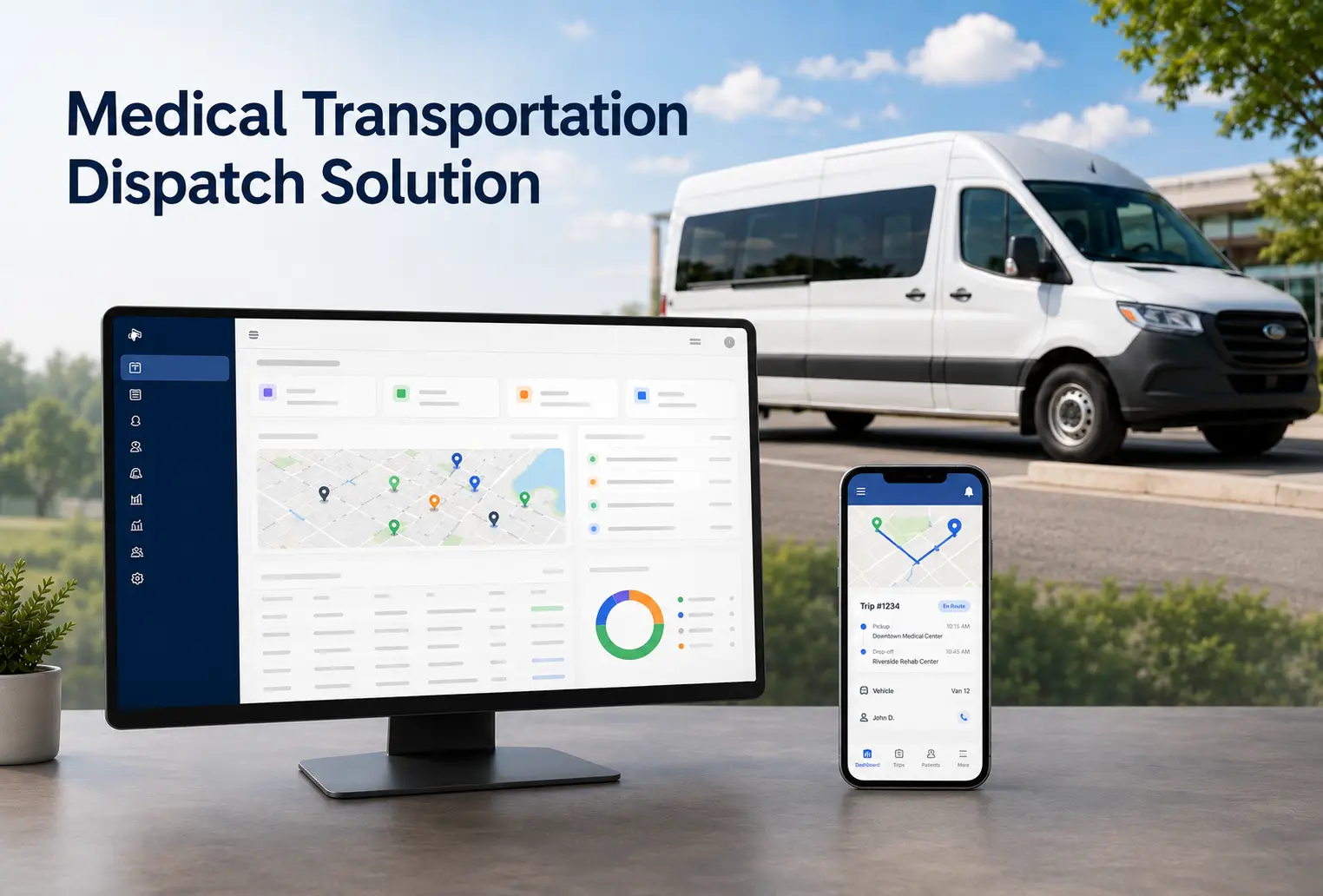
The web application gives dispatchers and administrators a central console to manage clients, drivers, vehicles, dispatch types, custom questions, inspections, timesheets, reports, users, roles, permissions, audit logs, and live map views. Dispatchers can create and assign dispatches, update statuses, duplicate records, cancel trips, review issues, and track operational activity from a single dashboard.
The iOS driver application was designed for field use. Drivers can securely log in, view assigned dispatches, accept or decline trips, update statuses, submit notes and photos, complete pre-trip and post-trip inspections, clock in and out, report issues or safety concerns, and continue working offline when network access is unavailable.
The backend architecture supports secure multi-tenant operations, role-based permissions, structured dispatch workflows, immutable status events, audit logging, file uploads, GPS history, reporting, SMS notifications, and real-time updates for the dispatch dashboard.
A key part of the solution is its GIS and GPS capability. Using PostgreSQL/PostGIS, the system can ingest driver GPS points, update live vehicle locations, show active vehicles on a map, detect stale locations, maintain GPS history, and export location history in formats such as KML for review and reporting.
The offline sync model was designed around append-only field events. Driver actions such as status changes, notes, inspections, GPS points, photos, timesheet events, and issue reports can be captured locally and synchronized later. When conflicts occur, such as a dispatch being cancelled or reassigned while a driver was offline, the system can flag those events for administrative review rather than silently overwriting critical records.
Security was built into the architecture from the beginning. The platform includes MFA, secure device access, encrypted storage, tenant-scoped data access, least-privilege permissions, rate limiting, audit logs, restricted production access, daily backups, and Canadian hosting.
Conclusion
This project demonstrates Digital Fractal’s ability to design complex operational software that connects office teams, field staff, mobile devices, live location data, workflow automation, and secure reporting into one integrated platform. The proposed solution goes beyond a simple dispatch tool. It combines custom software development, mobile application development, GIS capability, offline-first field operations, secure cloud deployment, multi-tenant architecture, and enterprise-grade reporting. For organizations that rely on mobile teams, regulated workflows, manual processes, or disconnected field operations, Digital Fractal can design and build practical systems that improve visibility, reduce administrative overhead, increase accountability, and modernize day-to-day operations. For commercial inquiries, please contact us.