
Overview
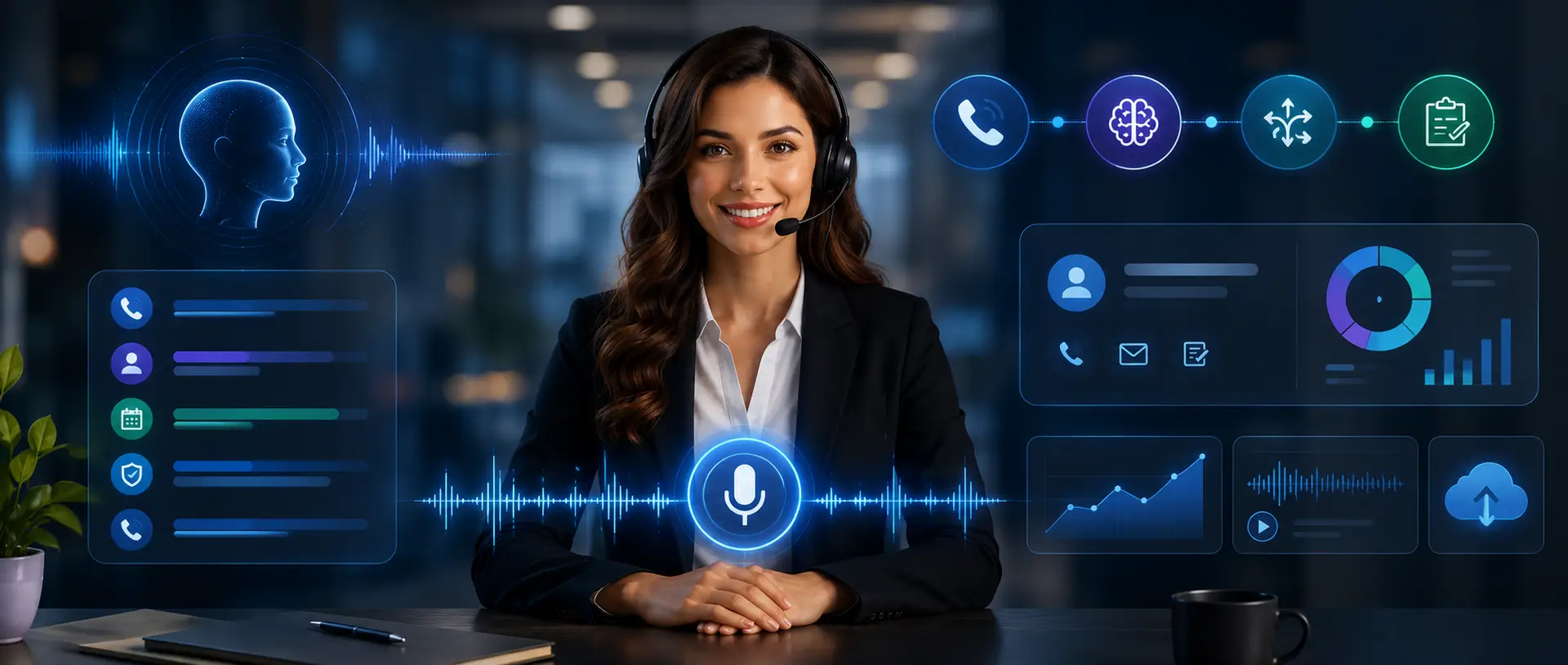
Digital Fractal Technologies developed an AI-powered voice receptionist platform designed to automate inbound business calls while maintaining a natural and professional caller experience. Unlike traditional IVR systems that rely on rigid phone menus, the solution uses conversational AI to understand caller intent, classify requests, collect structured information, and intelligently route or log calls in real time.
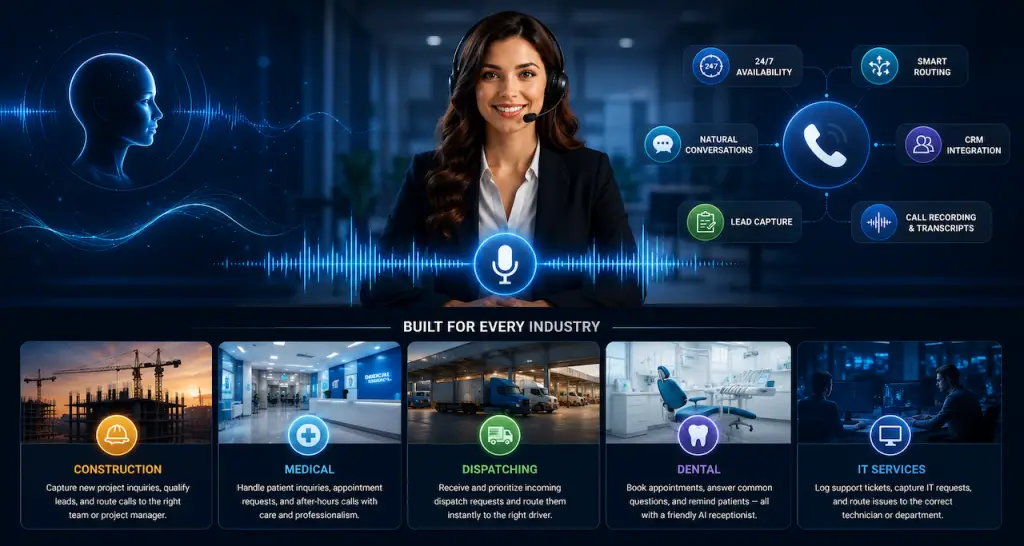
The platform was designed to support a variety of real-world business scenarios, including project inquiries, technical support requests, accounting calls, after-hours messaging, and cold-caller filtering. Every interaction is automatically logged into the CRM with structured data, transcripts, call recordings, and call outcomes, giving businesses full visibility into inbound communications.
Business Challenge
Many businesses struggle with constant interruptions from spam calls, repetitive inquiries, and poorly qualified leads, while still needing to respond quickly to legitimate customer opportunities and support requests. Traditional phone systems and IVRs often frustrate callers because they lack context awareness and force users through static menu trees.
The client required a system that could intelligently qualify inbound callers, reduce manual workload, operate after hours, and integrate directly into CRM workflows without sacrificing professionalism or customer experience.
In addition to handling new business inquiries, the platform also needed to support real-world operational scenarios such as existing customer support issues, urgent application problems, billing questions, and internal department routing. The challenge was not simply answering calls, but creating an AI-driven receptionist capable of understanding conversational context, making intelligent routing decisions in real time, and maintaining a consistent caller experience while ensuring all interactions were accurately captured inside backend business systems and CRM pipelines.
Solution Developed
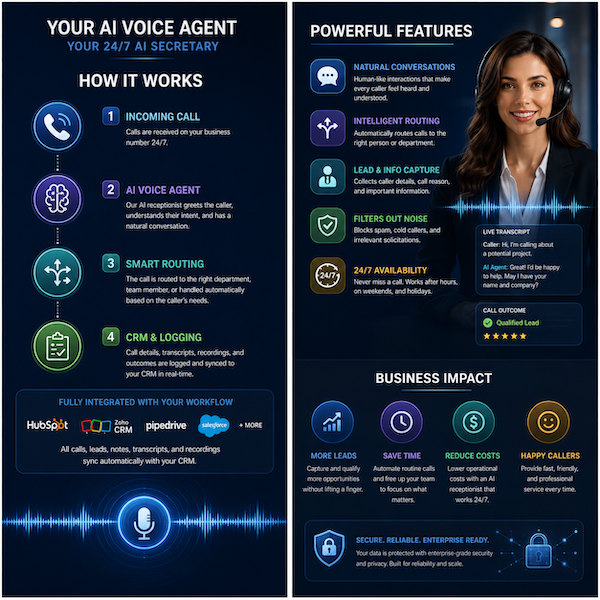
Digital Fractal Technologies built a multi-assistant AI voice platform capable of handling inbound business communications autonomously. The solution includes intelligent call classification, conversational lead qualification, dynamic call routing, after-hours handling, support request intake, and CRM integration.
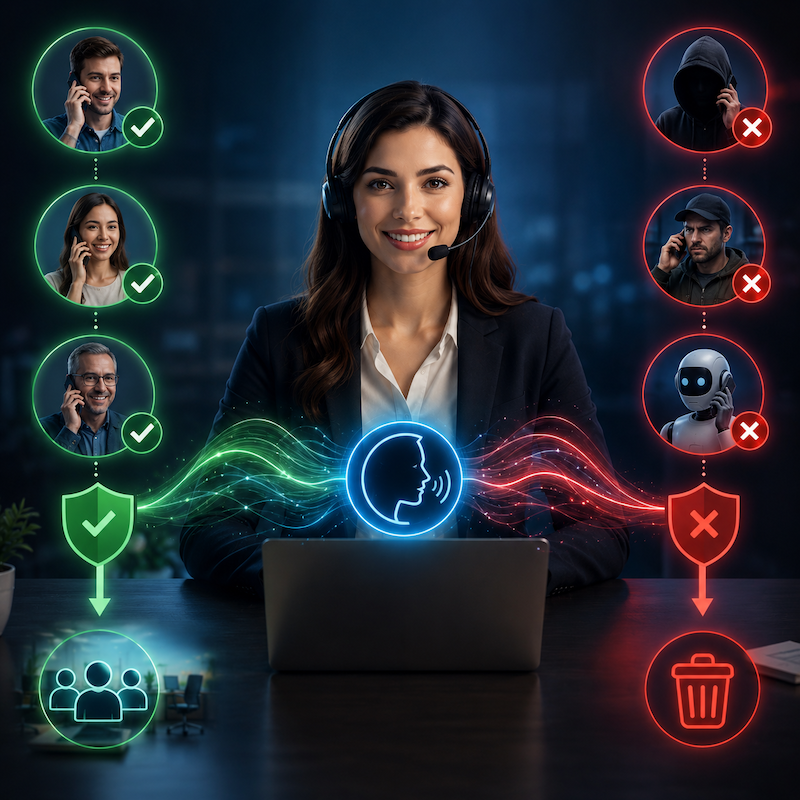
The voice agent was trained to distinguish between legitimate business opportunities, existing customer support issues, accounting inquiries, and cold outreach. Calls are handled conversationally rather than through scripted phone trees, allowing the assistant to respond naturally while still enforcing strict operational rules around routing, privacy, and information disclosure.
The system was also designed with scalability and operational flexibility in mind. Multiple AI assistants can be dynamically assigned based on business rules such as office hours, department workflows, or call type. Incoming calls are processed through a real-time orchestration layer that determines how each interaction should be handled, whether that means routing a qualified lead to a live department, logging an after-hours support request, blocking spam callers, or collecting structured intake information for CRM follow-up. This architecture allows businesses to centralize communications while maintaining consistent customer experiences across different departments and operational scenarios.
The Outcome
The final platform significantly reduced manual call handling while improving lead capture quality and operational visibility. Businesses using the system can automate front-line communications, capture after-hours opportunities, reduce interruptions from spam calls, and centralize all inbound call activity inside their CRM.
The architecture also provides a scalable foundation for future AI voice agent capabilities such as multilingual support, outbound AI calling campaigns, appointment scheduling, sentiment analysis, and advanced analytics workflows.
Work Process
Businesses looking to modernize scheduling and workforce operations can work with our team to evaluate how AI can improve efficiency, reduce manual coordination, and optimize resource allocation. We analyze existing workflows, operational constraints, and scheduling challenges, then develop custom AI models and optimization systems that integrate directly into real-world business operations and scale with future growth.

Discovery
Analyze workflows, dispatcher notes, workforce rules, constraints, and operational bottlenecks.

Integration
Connect scheduling systems, workforce data, availability, vehicles, and operational inputs.

Optimization
Train AI models to extract constraints and generate optimized schedules.

Deployment
Validate results, refine scheduling accuracy, and deploy scalable production infrastructure.